
The Ultimate Slime Supplies List for Therapists (and Why Slime Belongs in Your Therapy Room)
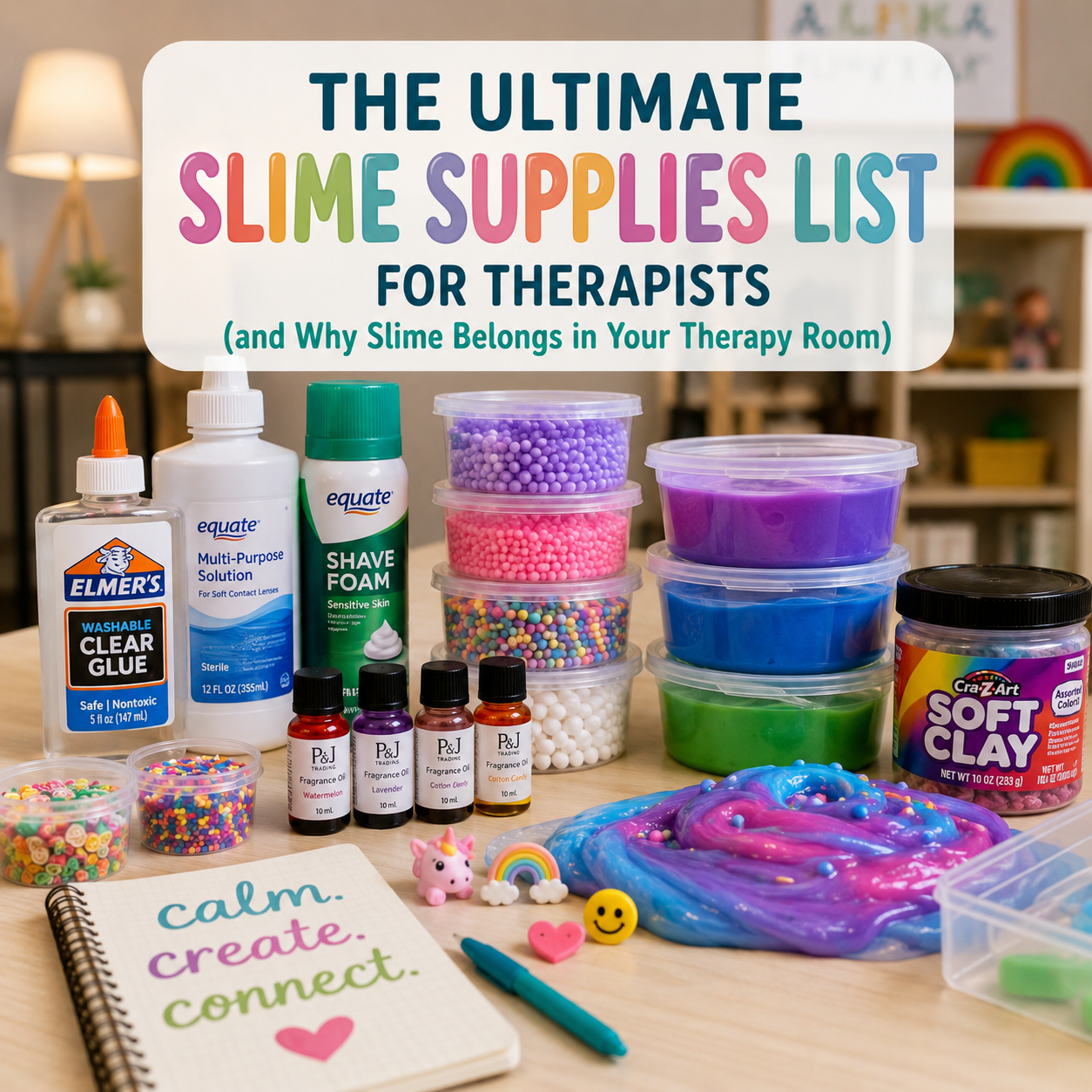
If you have ever watched a child's shoulders drop the moment their hands hit a tray of slime, you already know what I'm talking about. There's something almost magical that happens in those first few seconds and it's not an accident.
Slime is one of my favorite go-to tools in the therapy room, not because kids love it (though they absolutely do), but because of what it does clinically when we use it with intention.
Why Slime Is More Than Just a Sensory Activity
I want to normalize something: bringing slime into session is a clinical choice, not a "fun filler." When we understand the therapeutic mechanisms behind it, we can use it far more intentionally and explain its value to skeptical parents, administrators, or colleagues.
Here's what slime naturally supports:
Sensory Regulation
The repetitive, proprioceptive input from squeezing, stretching, and pressing slime activates the nervous system in ways that support co-regulation and grounding. For kids who carry a lot of anxiety or big body feelings, this kind of sensory input can help create the calm they need to actually engage.
Emotional Expression
Slime gives kids something to do with their hands while they talk, and sometimes what they do with the slime tells you more than their words. Watch how a child pokes, pounds, or gently strokes it. The process is communicative.
Grounding
For children who dissociate, feel disconnected, or struggle to stay present in session, sensory grounding tools like slime can help anchor them back into their bodies. The texture, temperature, and scent all work together as grounding cues.
Creativity and Mastery
When kids make slime themselves, choosing colors, mixing in add-ins, experimenting with textures, they experience a meaningful sense of control and competence. For children who feel powerless in so many areas of their lives, that matters deeply.
Relationship Building
Side-by-side sensory play lowers the relational stakes. Kids open up more easily when their hands are busy and the pressure of direct eye contact is reduced. Slime making creates the kind of natural, parallel engagement that builds trust without forcing it.
What to Look for in Therapy Room Slime Supplies
Not all slime supplies are created equal, and you don't have to break the budget to build a solid collection. Here's what I keep in mind when stocking my therapy room:
• Scented options for multi-sensory engagement. Scent is one of the most powerful sensory inputs we have. Adding a scented oil or using scented slime kits brings in an olfactory layer that can be especially grounding and calming, and kids love the novelty.
• Variety in texture. Fluffy slime, crunchy slime, glossy slime: each creates a different sensory experience. Having variety means you can match the tool to the child's sensory profile.
• Add-ins for creative control. Foam beads, clay charms, clay slices: these give children agency in the creation process, which is clinically meaningful, especially for kids working through trauma or control-related themes.
• Easy cleanup and storage. Therapy rooms are busy. Slime supplies that store well and don't create a 20-minute cleanup process make it far easier to use these tools consistently.
• Non-toxic and safe materials. Always check labels. Washable glue, non-toxic activators, and age-appropriate add-ins are non-negotiables.
My Favorite Slime Supplies for the Therapy Room
I've pulled together a curated list of supplies I use and recommend, covering everything from scented oils and soft clay to clear glue, activators, storage containers, and fun add-ins like clay slices and sprinkle-style accessories.
Whether you're just starting to bring slime into sessions or you're looking to refresh your supply cabinet, this list has everything you need to get started.
Explore the full curated slime supply list here
Some links may be affiliate links. I may earn a small commission at no extra cost to you.
A Note for the Therapist Who's Still on the Fence
If you're sitting there thinking, "This sounds great, but I wouldn't know how to structure it therapeutically" -- you're not alone. Most of us weren't taught creative interventions in grad school.
The good news? You don't need a perfectly scripted session plan to use slime well. Start simple. Invite the child to make slime with you. Narrate what you notice. Follow their lead.
The therapeutic relationship plus sensory engagement? That combination does more work than we often give it credit for.
Have a favorite way you use slime in sessions? I'd love to hear it -- drop it in the comments below.