
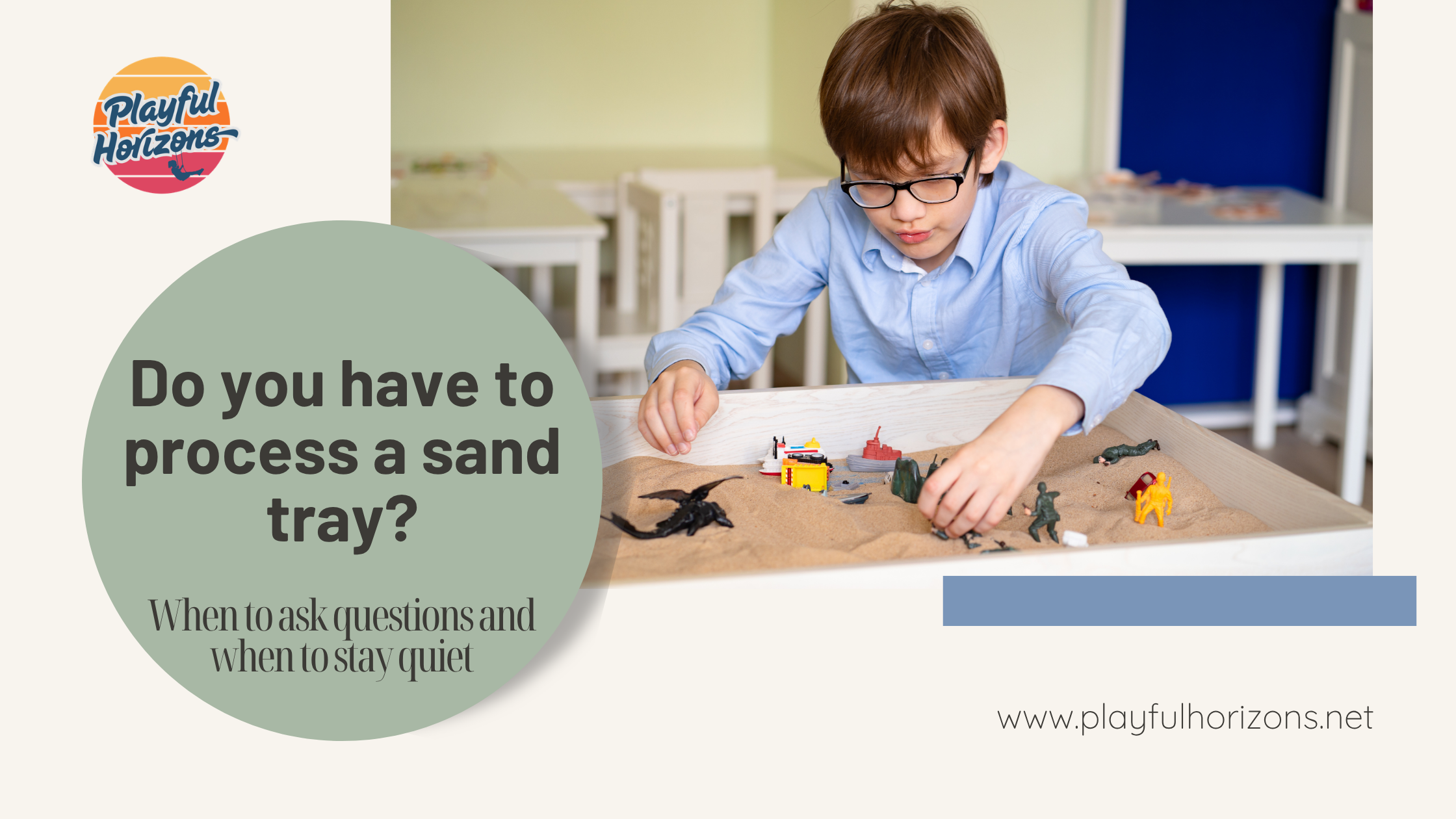
Do You Have to Process a Sand Tray? When to Ask Questions and When to Stay Quiet
Whether to process a sand tray depends on your theoretical orientation, the client's developmental level, whether the tray was spontaneous or directive, and the depth of the client's immersion in their own metaphor. In child-centered work, silence and presence are often more therapeutically powerful than questions. When questions are used, they should invite the client to share their own meaning rather than suggest the therapist's interpretation.
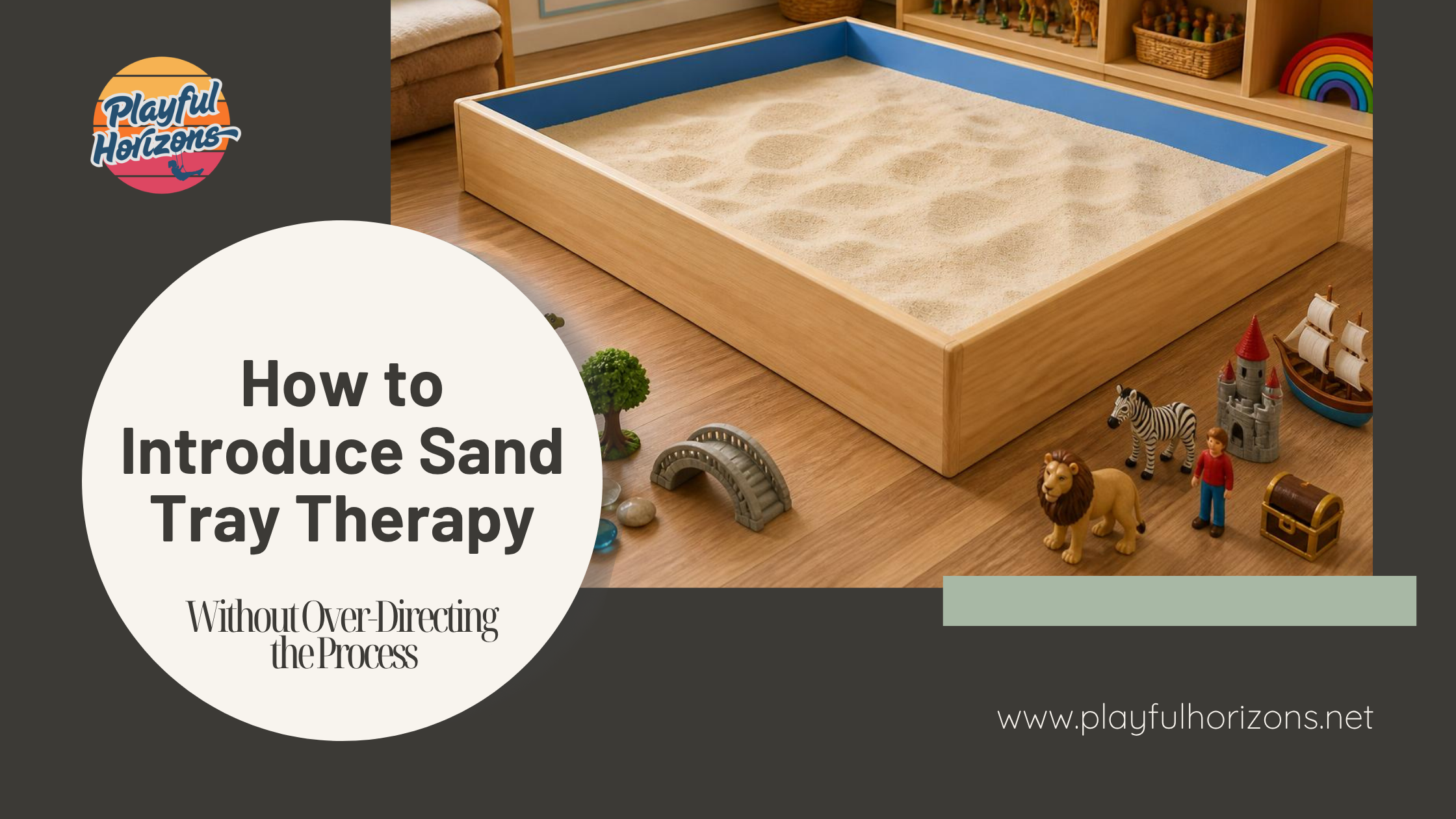
How to Introduce Sand Tray Therapy Without Over-Directing the Process
Introducing sand tray therapy well means saying less than you think you need to. In a child-centered model, the tray is simply part of the room. It’s available, accessible, and uninstructed. In more directive work, a brief, clear introduction is all that's needed. Point to the tray, point to the miniatures, and invite the child to create a scene in the sand. Your clinical stance, not your explanation, is what shapes the therapeutic experience.
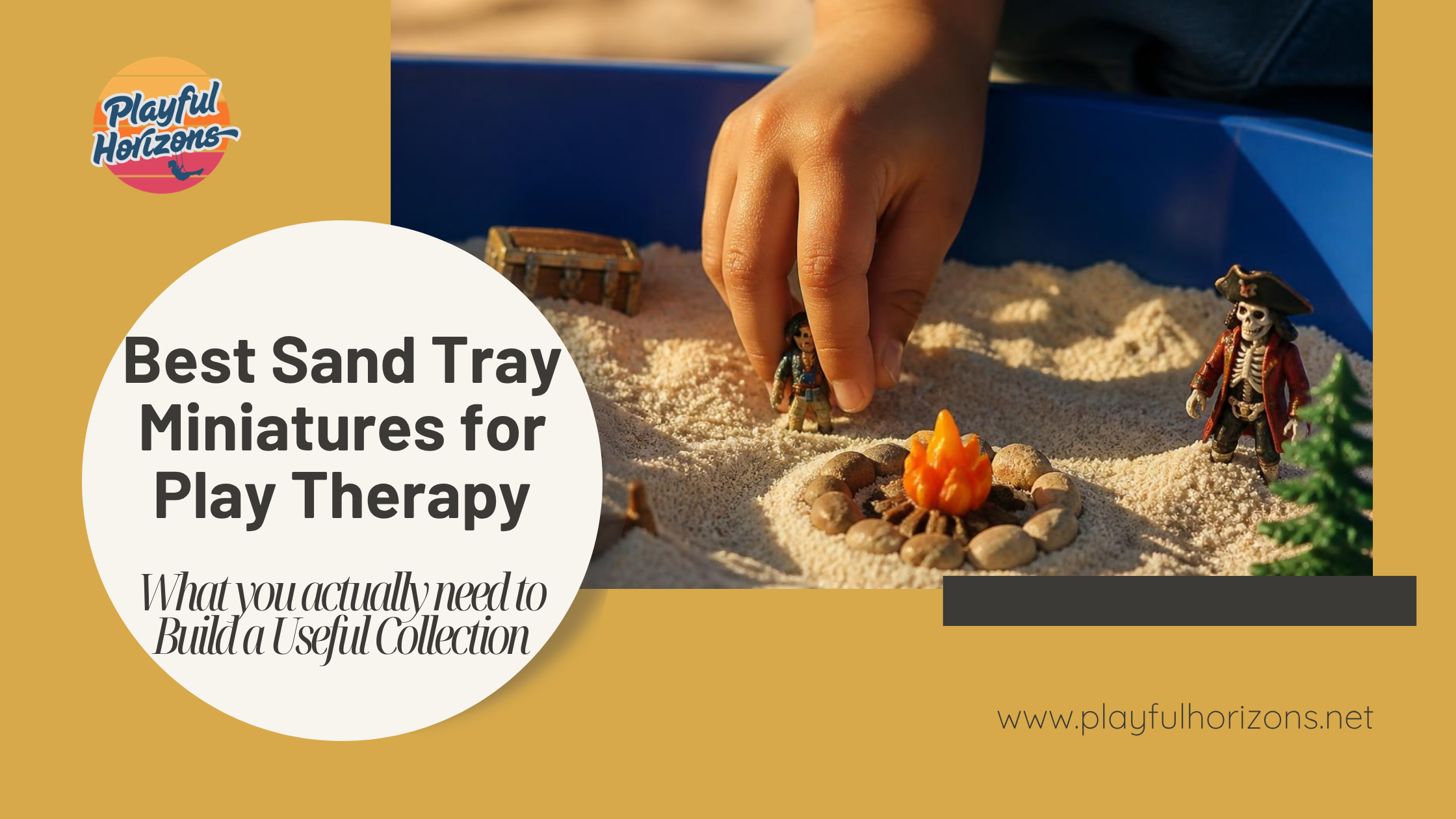
Best Sand Tray Miniatures for Play Therapy: What You Actually Need to Build a Useful Collection
Building a sand tray miniature collection for play therapy doesn't require hundreds of pieces … it requires symbolic range. A strong collection includes representation across 12 core categories: people, animals, buildings, transportation, vegetation, fences and gates, natural items, fantasy, spiritual and mystical, household, landscaping, and miscellaneous. The goal is for any client to walk up to your shelves and find something that can represent their world.
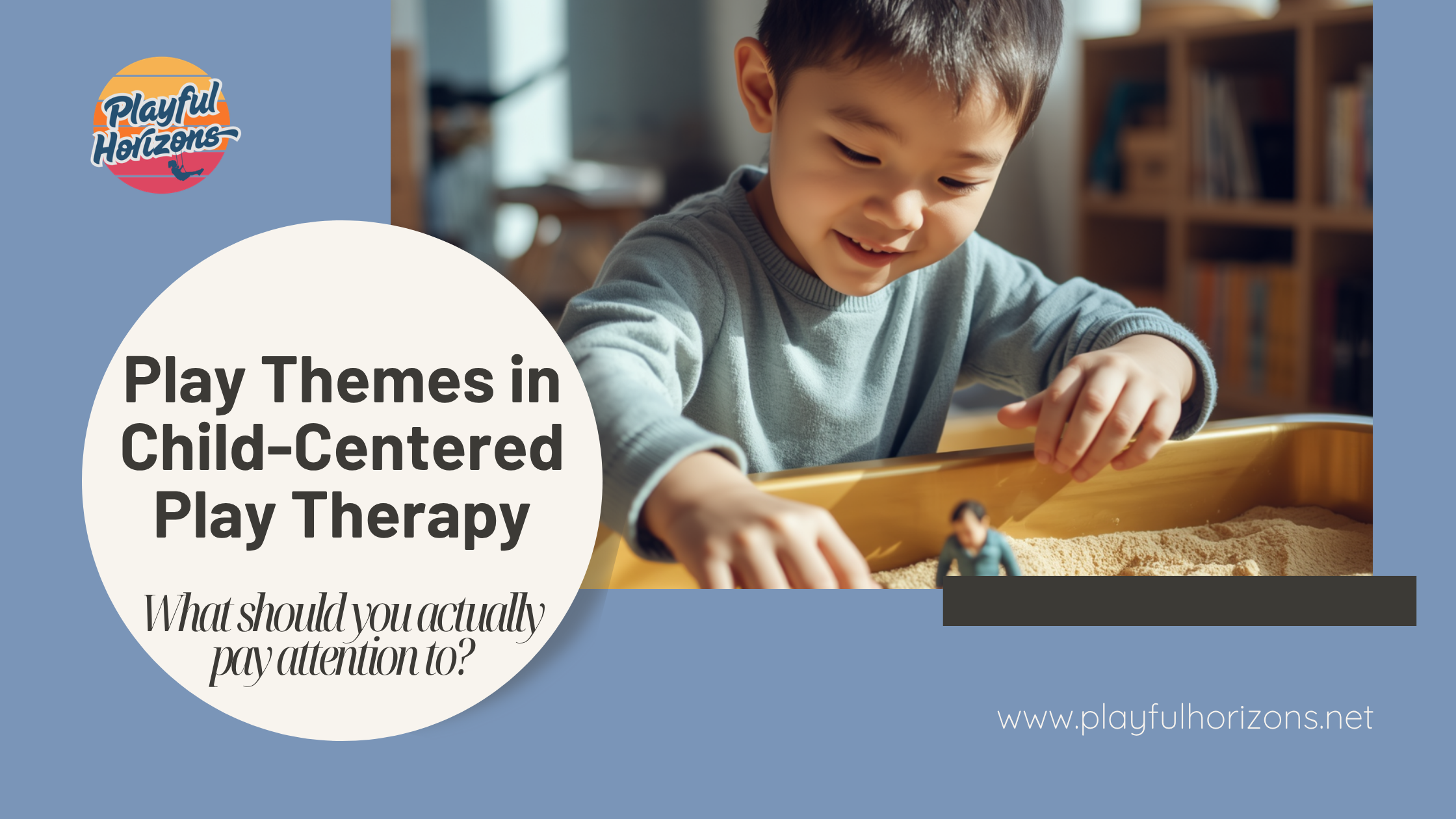
Play Themes in Child-Centered Play Therapy: What Should You Actually Pay Attention To?
Play themes in child-centered play therapy are patterns of behavior, imagery, or emotion that repeat across a session or across multiple sessions with increasing intensity or consistency. A single play behavior is not a theme. Themes are identified through repetition, intensity, context, and change over time and not from a single action in a single session.
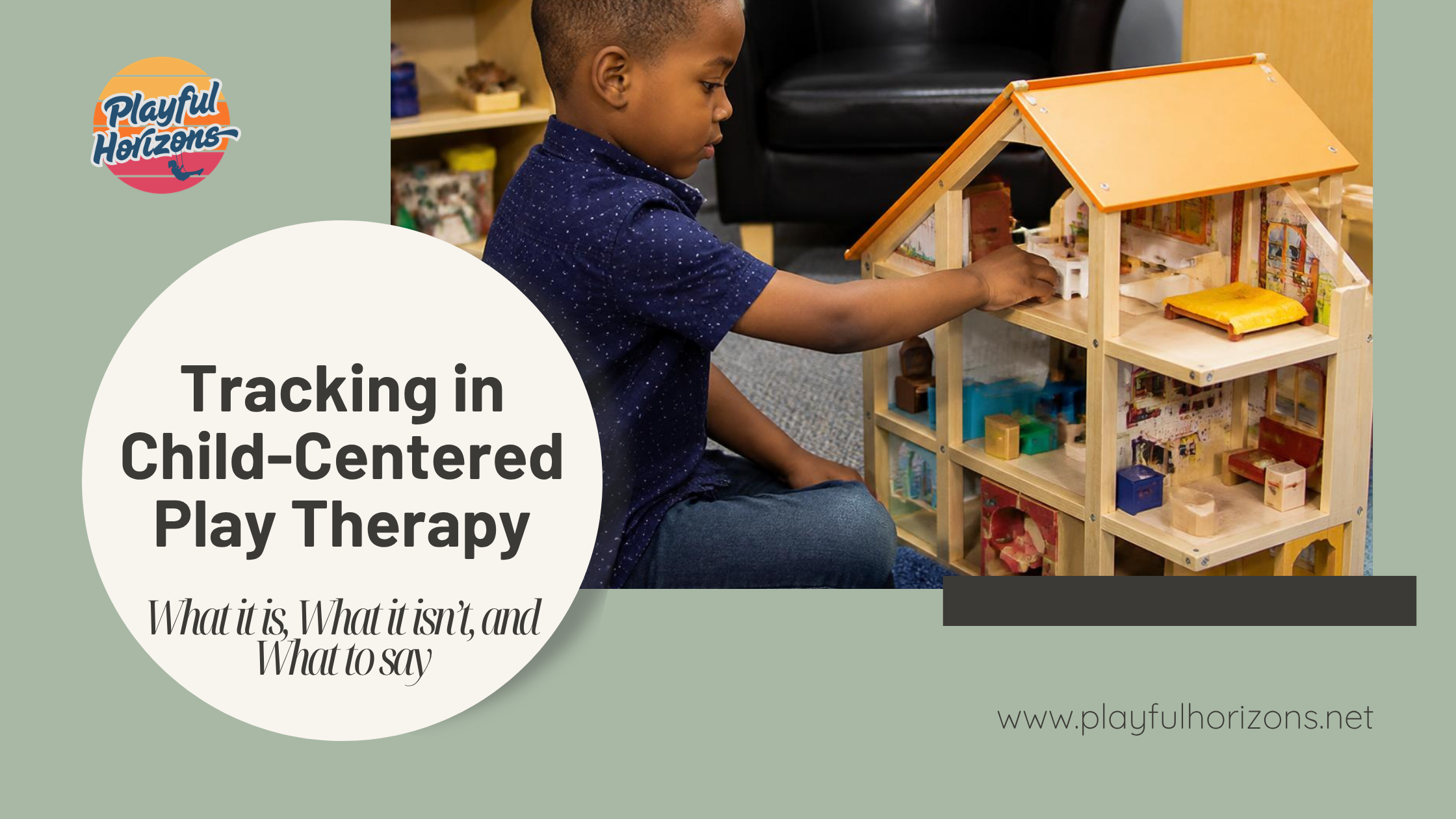
Tracking in Child-Centered Play Therapy: What It Is, What It Isn't, and What to Say
Tracking in child-centered play therapy is the skill of verbally noting what a child is doing without interpretation, praise, or judgment. It communicates presence and attunement while keeping the therapist out of the child's lead. Tracking is not narrating everything the child does, asking questions, or offering praise, it's a deliberate, attuned response that follows the child's tempo and communicates: I see you and I am with you.
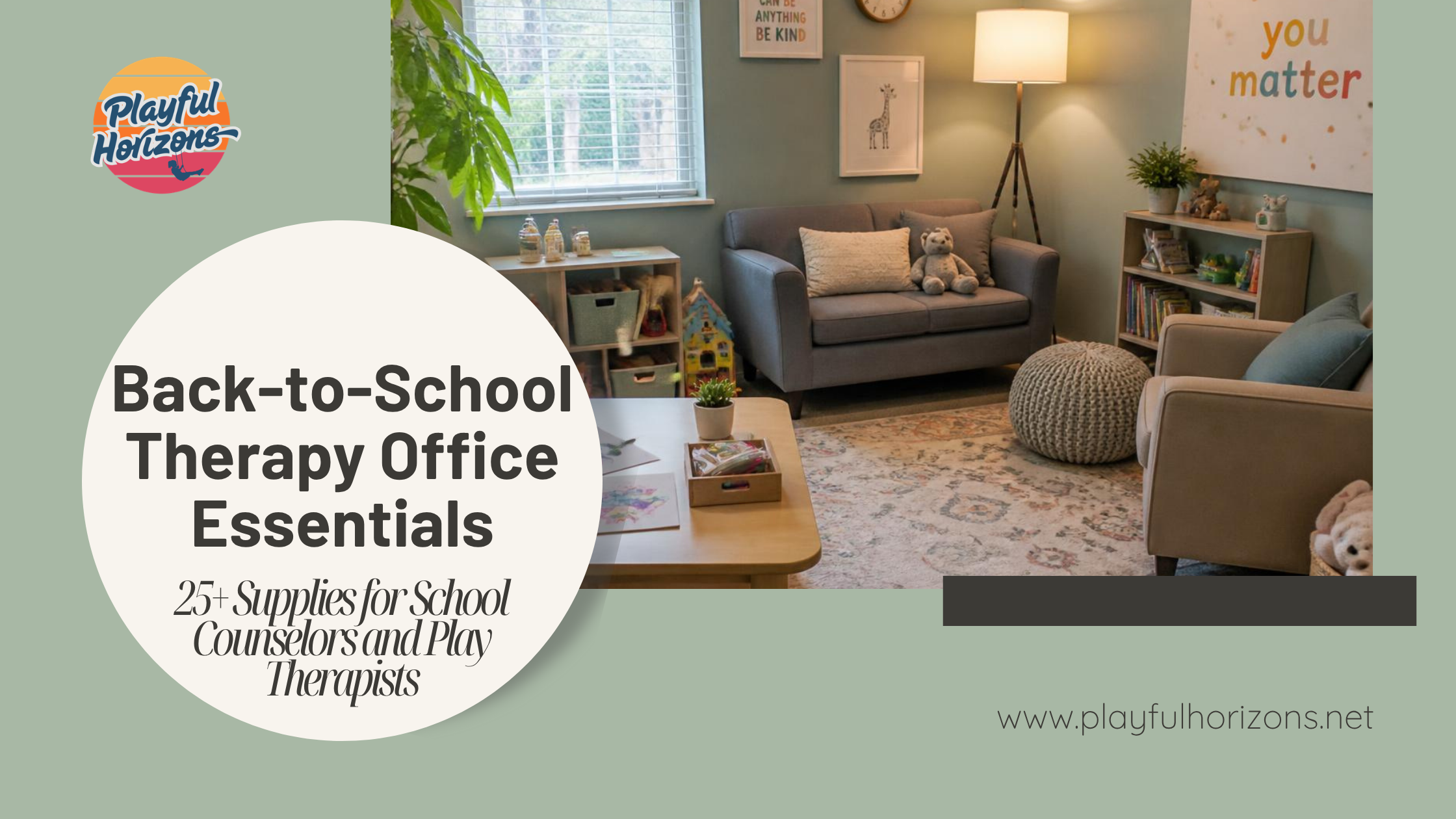
Back-to-School Therapy Office Essentials: 25+ Supplies for School Counselors and Play Therapists
Back-to-school season is the perfect time for school counselors and play therapists to refresh their office supplies. Essential categories include regulation and sensory tools, portable play supplies, art and creative expression materials, games and connection tools, calm-down corner items, and basic organization supplies. This guide covers what to restock, what to upgrade, and exactly what to prioritize at $50, $100, and $250 budgets.
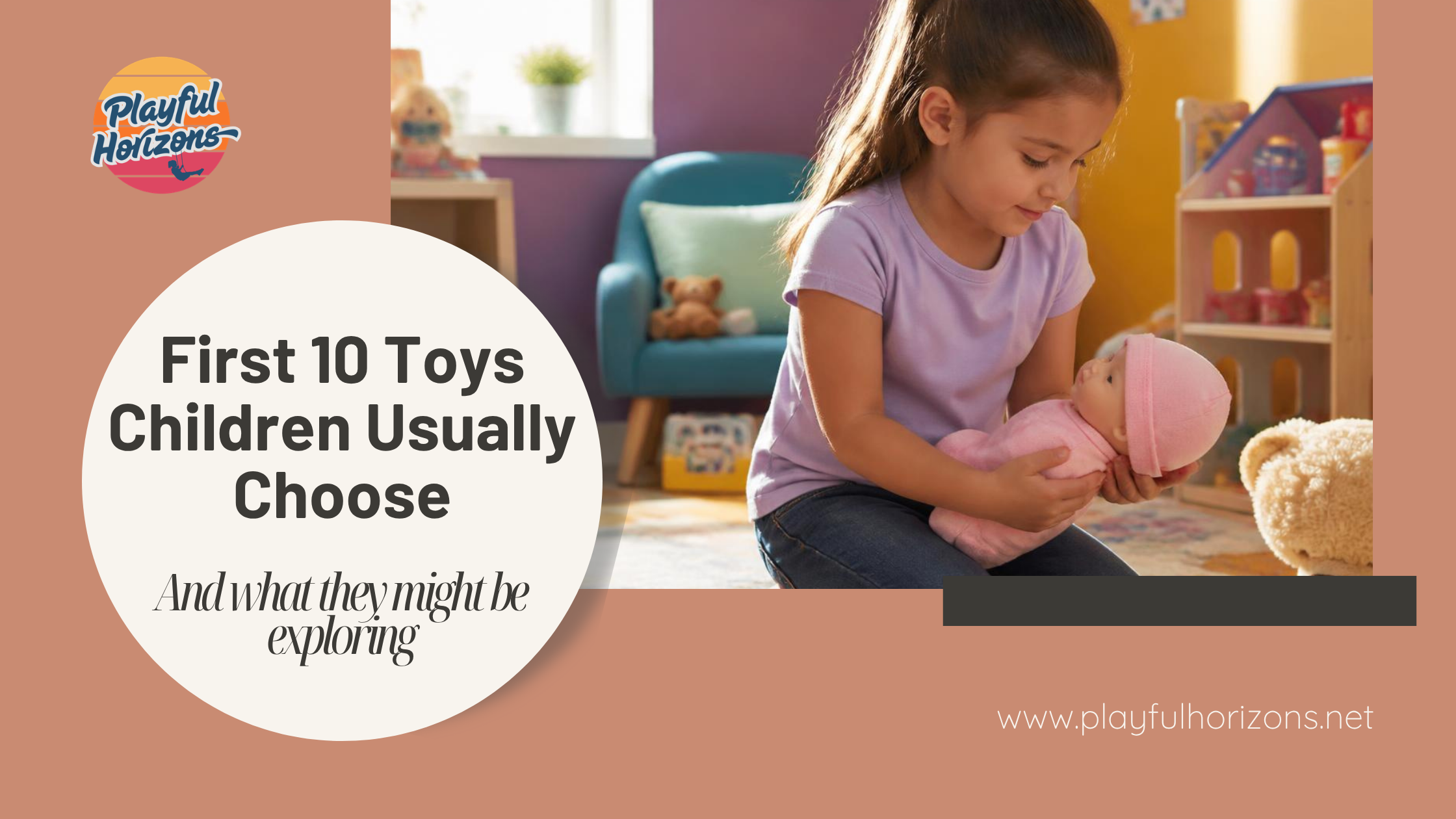
The First 10 Toys Children Usually Choose (And What They Might Be Exploring)
The toys children reach for first in play therapy often open windows into what they're carrying. Baby dolls, dollhouses, puppets, swords, handcuffs, medical kits, art supplies, animals, blocks, and kitchen sets are among the most common first choices and each one can open opportunities to explore a wide range of themes, from nurturing and family dynamics to anger, control, trauma processing, and real-life role exploration.

Why Toy Selection Matters More Than You Think in Child-Centered Play Therapy
In child-centered play therapy, toy selection is a clinical decision. The toys in the room communicate acceptance, permission, and safety to children before a single word is spoken. Grounded in Garry Landreth's framework, intentional toy selection ensures that each item serves a therapeutic purpose -- supporting emotional expression, nurturing, aggression release, creativity, or mastery -- while reflecting the diversity of the children who use the space.
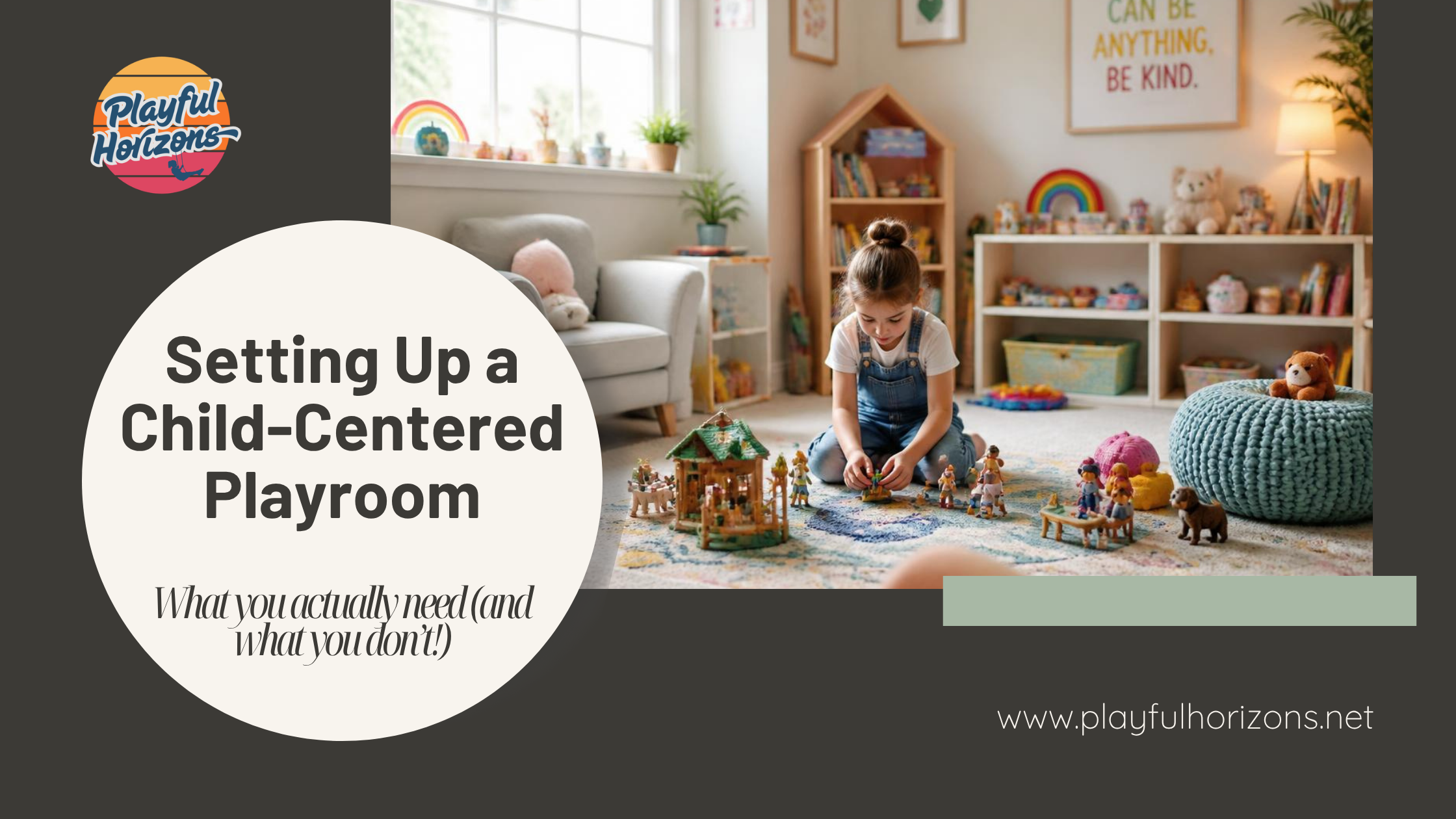
How to Set Up a Child-Centered Play Therapy Room: What You Actually Need (and What You Don't)
Setting up a child-centered play therapy room isn't about having the most toys. It's about selecting materials with clinical intentionality. A well-designed CCPT room includes carefully chosen items across key therapeutic categories: nurturing toys, aggressive expression toys, creative arts materials, sensory tools, and real-life/domestic play items. Everything in the room should be at the child's level, durable enough to withstand genuine play, and chosen for a clinical reason … not collected at random.

Limit Setting in Play Therapy: How to Use the ACT Model Without Losing the Relationship
The ACT model is a three-step limit-setting approach used in child-centered play therapy: Acknowledge the child's feeling, wish, or want; Communicate the limit clearly; and Target two appropriate alternatives. Developed by Dr. Garry Landreth, ACT allows therapists to hold firm limits while staying warm and attuned, protecting both the safety of the space and the therapeutic relationship.
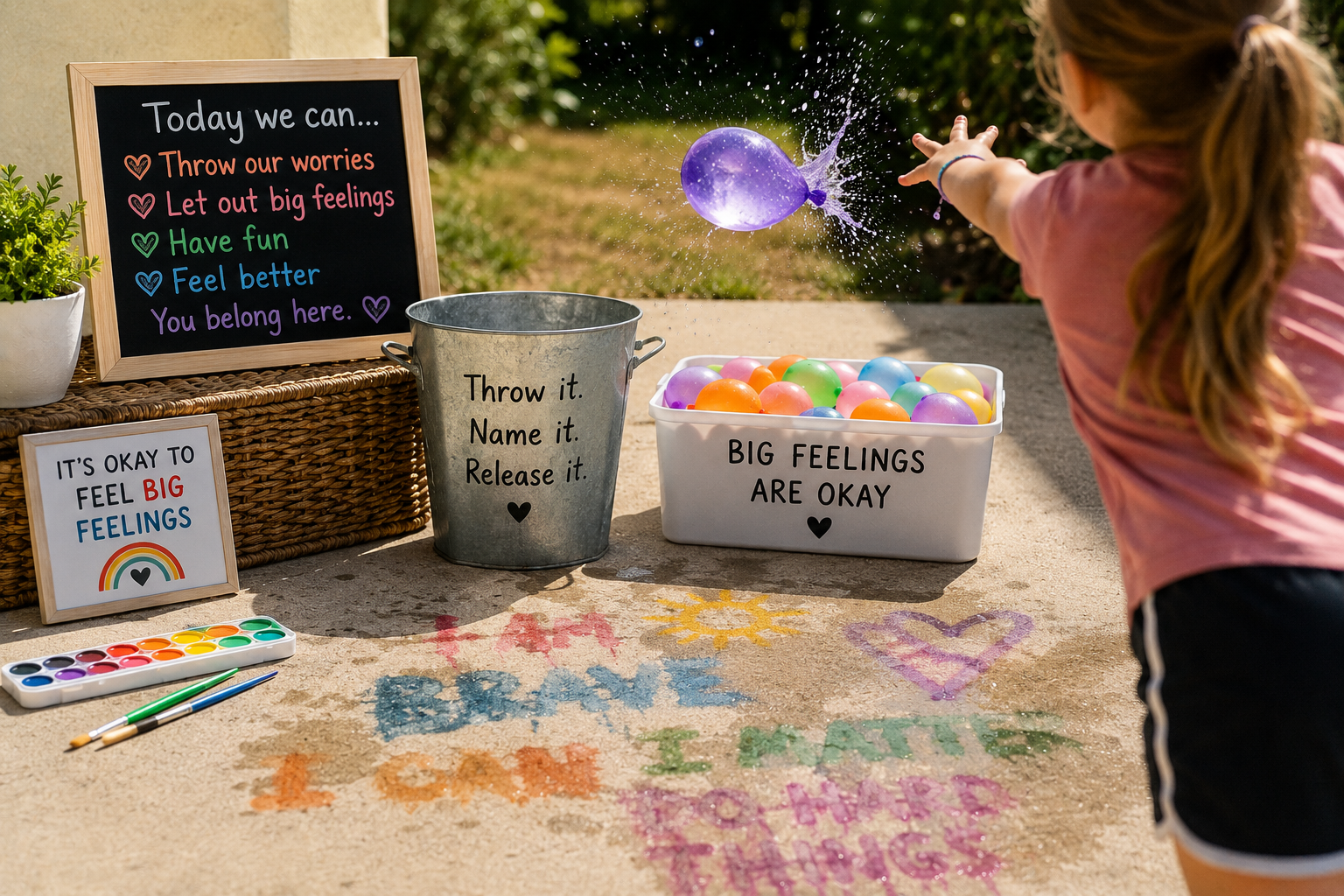
Water Balloons in Play Therapy
Reusable water balloons make a surprisingly powerful play therapy tool for helping children release and process big feelings. By naming a fear, frustration, or worry out loud while throwing the balloon, children get to move the emotion through their body in a way that talking alone never quite achieves. Add a sidewalk painting activity afterward and you have a complete session intervention that addresses emotional expression, regulation, and the concept that feelings are temporary.
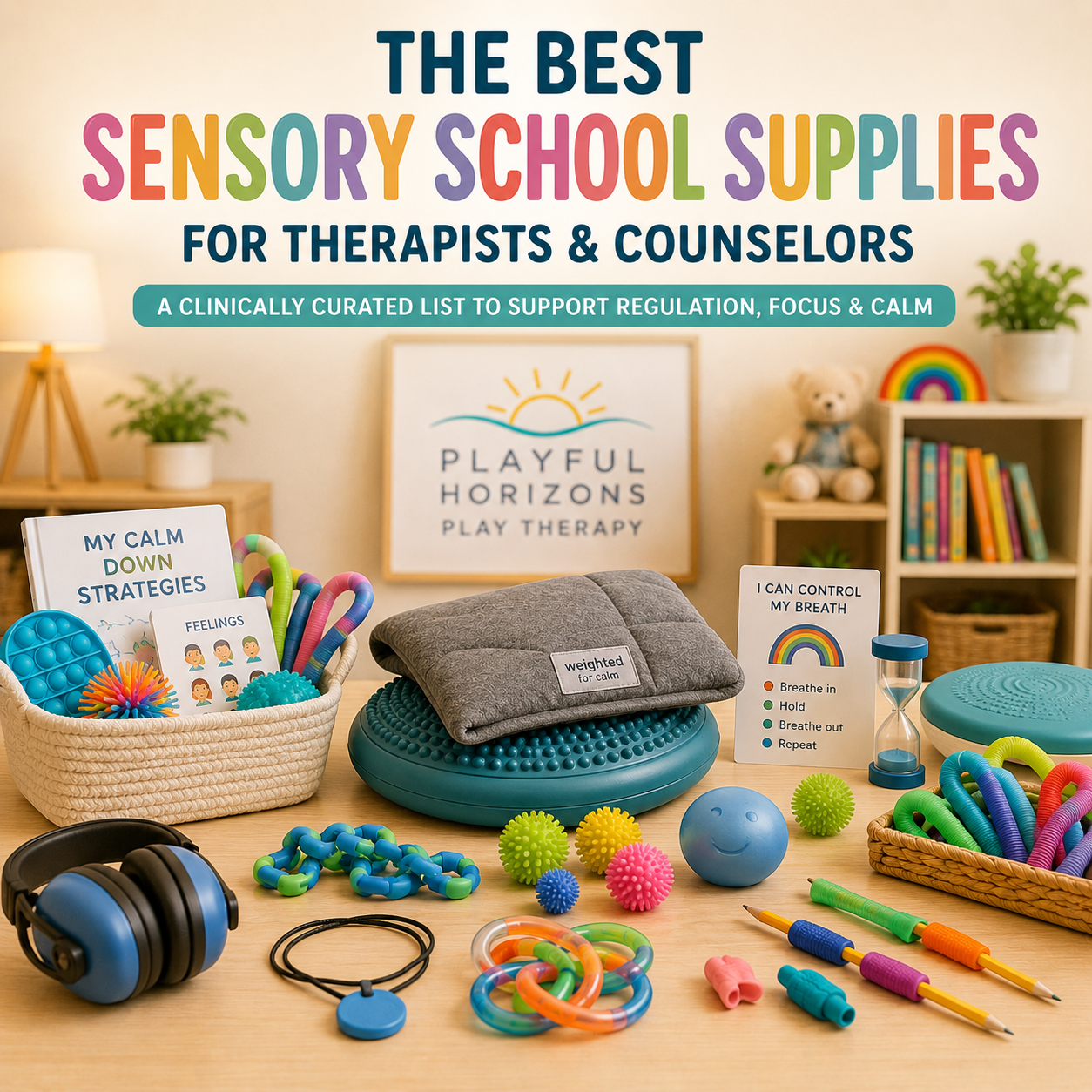
The Best Sensory School and Office Supplies for Therapists
The right sensory supplies can transform a therapy room or school counseling office into a space where children feel calm, regulated, and ready to do the work. This therapist-curated guide breaks down the categories of sensory tools worth having, why they work clinically, and what to look for when building your collection.
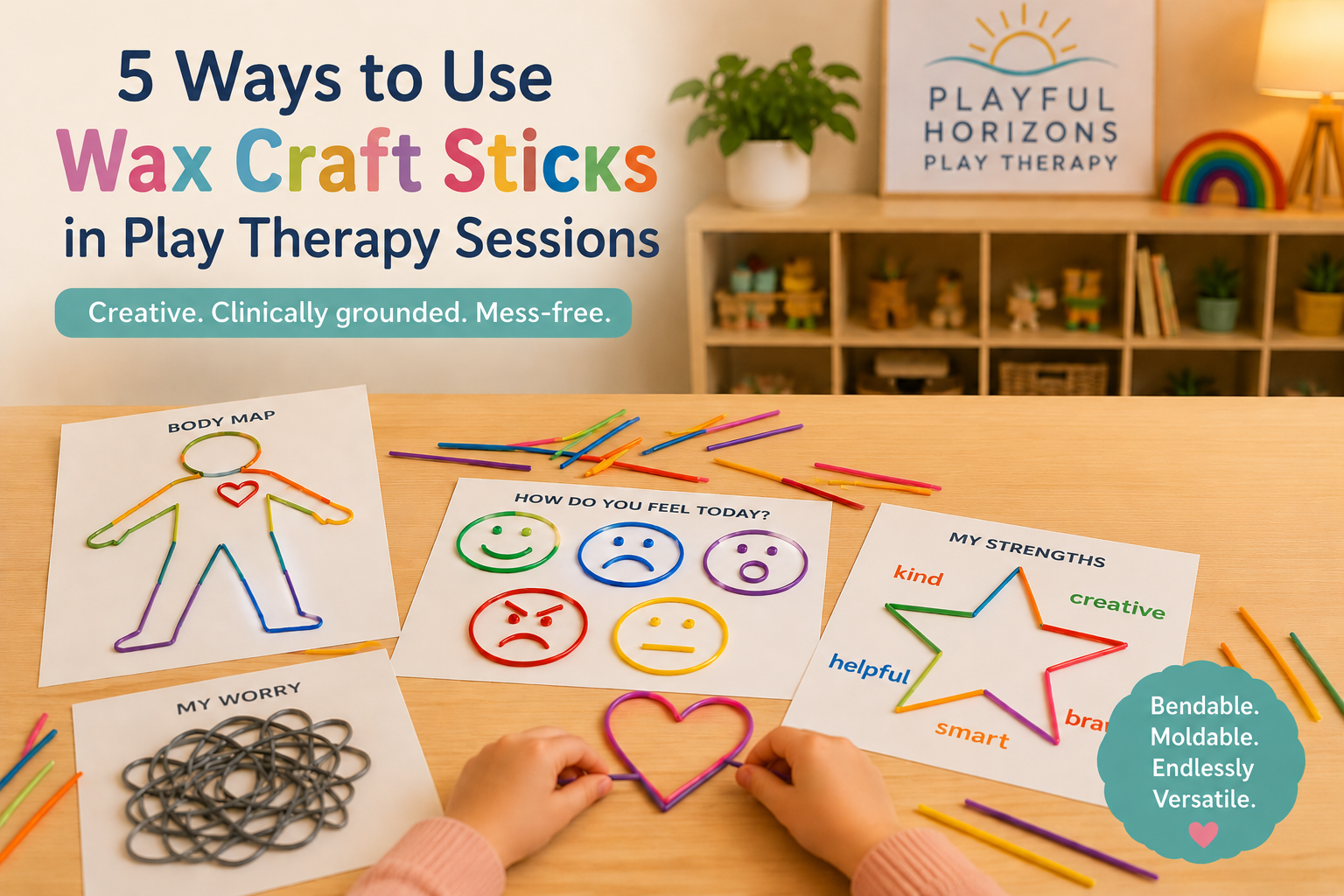
5 Ways to Use Wax Craft Sticks in Play Therapy Sessions
Some of the best therapy tools are the ones that do not look like therapy tools at all.
Wax craft sticks are exactly that. The moment a child spots them on the table, they reach for them. There is no hesitation, no wariness, no "what are we doing today." They just start making things.
Here are five ways I use them in session, and the clinical reasoning behind each one.

The Best Puppets for Play Therapy (and How to Use Them Clinically)
There is a particular kind of moment that happens in session when a child picks up a puppet, slips their hand inside, and suddenly starts saying things they could not say five minutes ago.
The puppet is talking now. Not them. That distance is exactly what makes them one of the most clinically rich tools we can keep in the therapy room.
This post breaks down why puppets work, what to look for when building your collection, and specific recommendations for puppets worth having on your shelf.
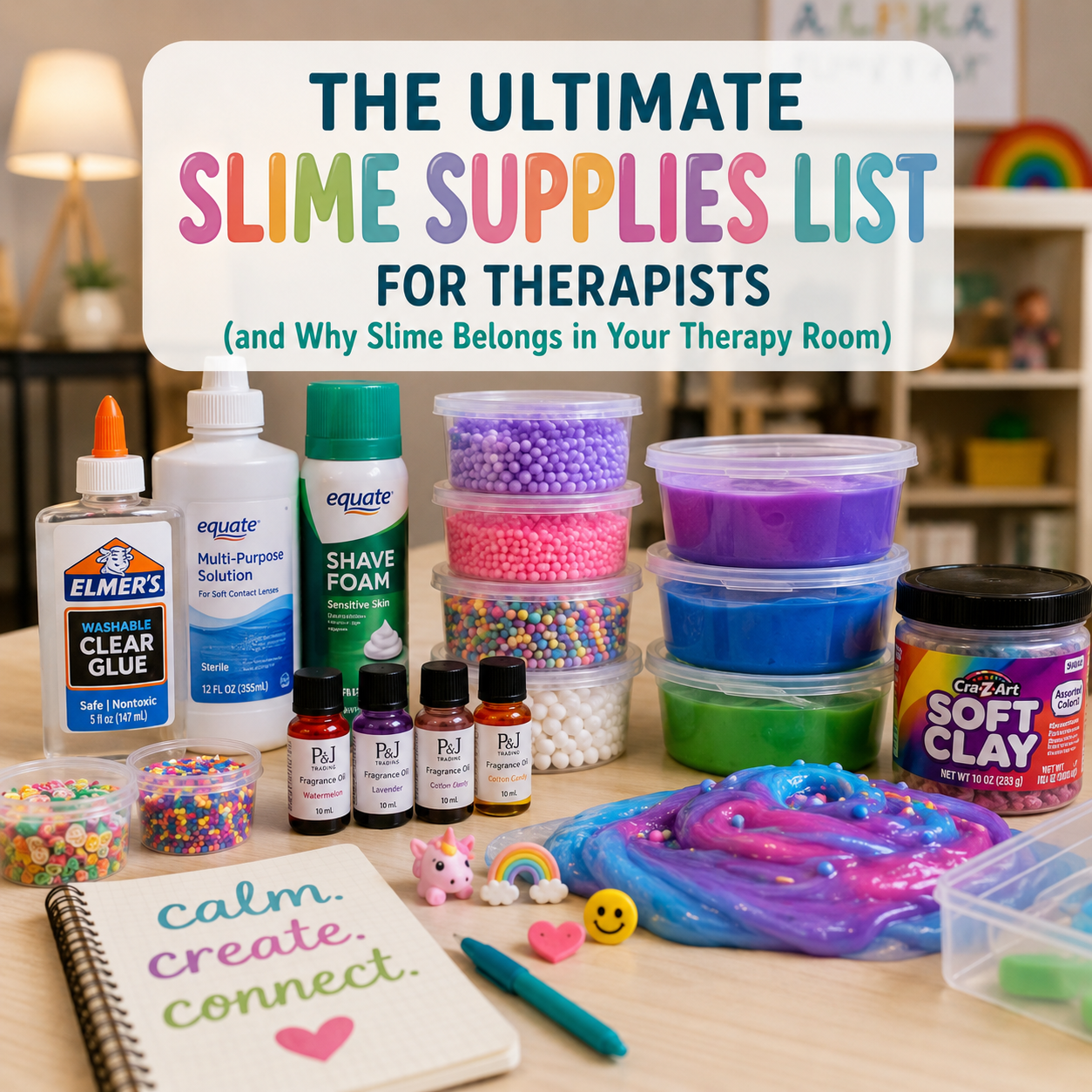
The Ultimate Slime Supplies List for Therapists (and Why Slime Belongs in Your Therapy Room)
If you have ever watched a child's shoulders drop the moment their hands hit a tray of slime, you already know what I'm talking about. There's something almost magical that happens in those first few seconds, and it's not an accident.
Slime is one of my favorite go-to tools in the therapy room, not because kids love it (though they absolutely do), but because of what it does clinically when we use it with intention.

How Play Therapy Helps Children with Anxiety
If you have a child on your caseload who comes in wide-eyed and frozen, or who fills every session with frantic play and can barely slow down long enough to breathe then you already know that anxiety in children looks different than it does in adults.
It shows up in the body. In movement. In play.
That's exactly why play therapy is one of the most powerful clinical approaches for children struggling with anxiety. And if you're a therapist who has ever Googled "what to do with an anxious kid in session" then this post is definitely for you.

5 Must-Have Items for Your Portable Play Therapy Kit
If you’re a school-based play therapist, in-home clinician, or anyone who’s ever worked out of a shared office, you know the struggle: limited space, constant transitions, and super quick turnaround time between sessions.
Luckily, you don’t need a full playroom to do meaningful, creative work. Over time, I’ve found items that are quick and easy to clean-up, easy to transport, and make a big difference in fostering the healing work that our kiddos do through play.
Here are five of my go-to favorites for a portable or limited space play kit that actually works in the real world.

Grow Your Goals: Playful Activity for Goal Setting and Planning
Therapists know that growth takes time and helping kids understand that their small steps matter can spark motivation and self-confidence. That’s why I love the Grow Your Goals activity! It turns abstract aspirations into something visual and hands on. Whether you're working in a playroom, classroom, or counseling office, this flower-powered intervention makes goal-setting fun, concrete, and meaningful.

Stories in Motion: A Play-Based Timeline Activity for Kids
Kids don't just tell their stories—they move through them, jump into them, and sometimes even wiggle and roll right through the tough parts. Stories in Motion transforms a regular timeline reflection into a fully immersive play experience, helping children map out their past and imagine their future.
Designed for play therapists, school counselors, and child-focused clinicians, this activity pulls together gross motor skills, imaginative play, and therapeutic reflection to support children in understanding the past experiences that have shaped them and reflect on their future goals.

Bear on the Mountain: A Mindfulness & Deep Breathing Technique for Kids
Imagine a fuzzy little bear making its way up a mountain every time your child takes a deep breath in—and curling into a cozy cave when they breathe out. Bear Mountain Breathing transforms basic breath work into a soothing adventure, blending mindfulness, play therapy, and imagination into one snuggly intervention.
This child-friendly strategy is perfect for therapists, teachers, and parents who want to introduce diaphragmatic breathing in a way that sticks—especially for younger children who learn best through movement, story, and sensory play.