
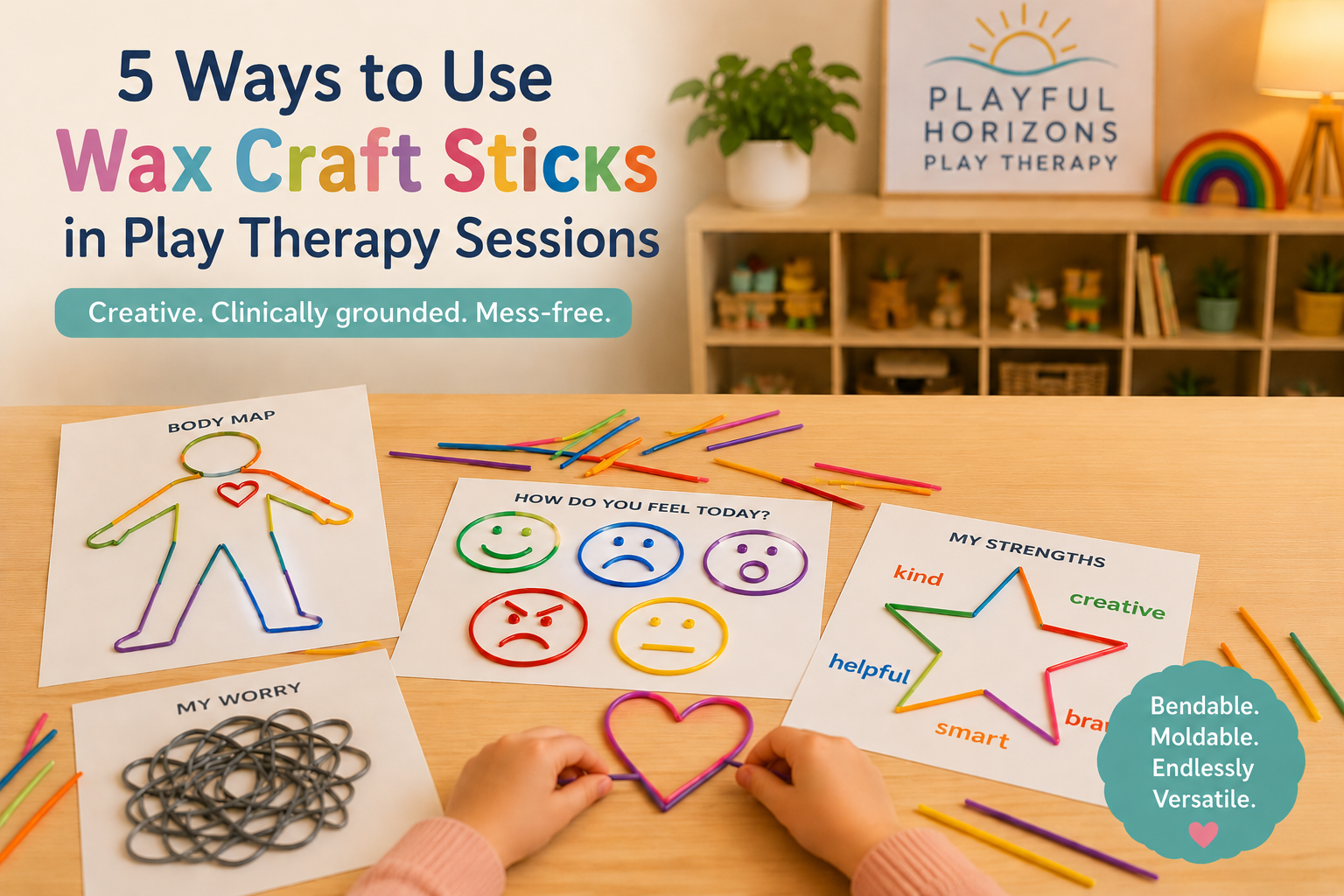
5 Ways to Use Wax Craft Sticks in Play Therapy Sessions
Some of the best therapy tools are the ones that do not look like therapy tools at all.
Wax craft sticks are exactly that. The moment a child spots them on the table, they reach for them. There is no hesitation, no wariness, no "what are we doing today." They just start making things.
Here are five ways I use them in session, and the clinical reasoning behind each one.
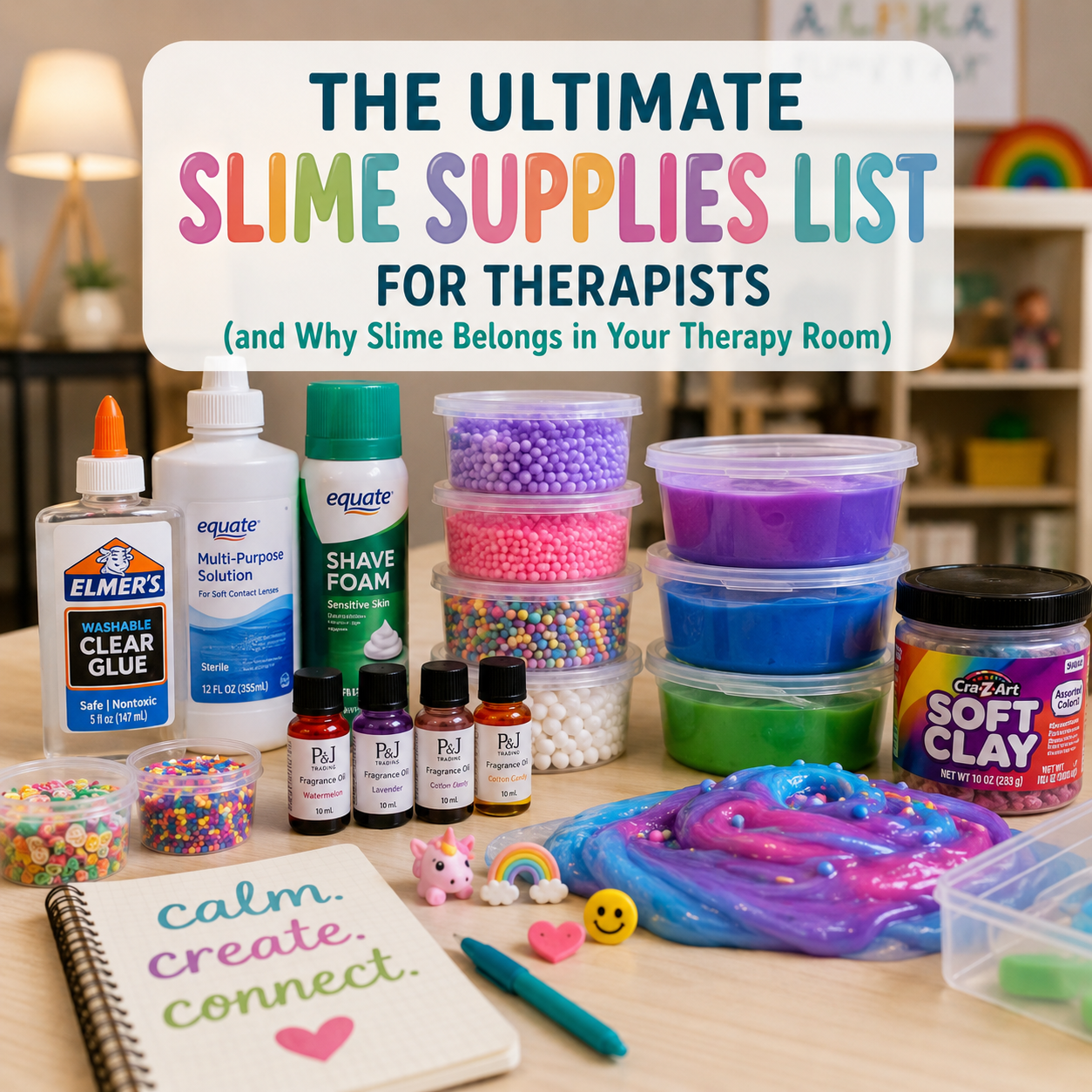
The Ultimate Slime Supplies List for Therapists (and Why Slime Belongs in Your Therapy Room)
If you have ever watched a child's shoulders drop the moment their hands hit a tray of slime, you already know what I'm talking about. There's something almost magical that happens in those first few seconds, and it's not an accident.
Slime is one of my favorite go-to tools in the therapy room, not because kids love it (though they absolutely do), but because of what it does clinically when we use it with intention.
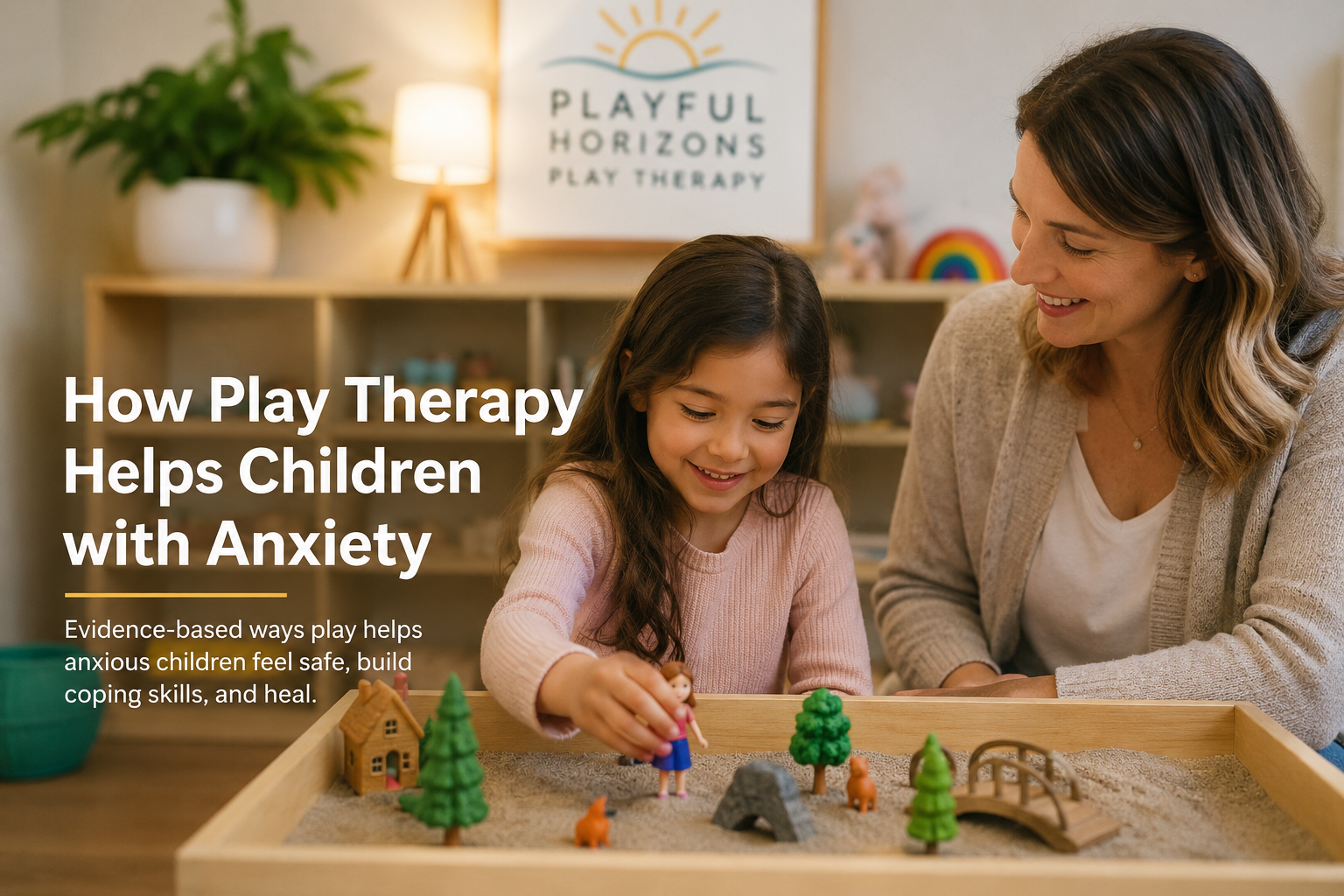
How Play Therapy Helps Children with Anxiety
If you have a child on your caseload who comes in wide-eyed and frozen, or who fills every session with frantic play and can barely slow down long enough to breathe then you already know that anxiety in children looks different than it does in adults.
It shows up in the body. In movement. In play.
That's exactly why play therapy is one of the most powerful clinical approaches for children struggling with anxiety. And if you're a therapist who has ever Googled "what to do with an anxious kid in session" then this post is definitely for you.

Stories in Motion: A Play-Based Timeline Activity for Kids
Kids don't just tell their stories—they move through them, jump into them, and sometimes even wiggle and roll right through the tough parts. Stories in Motion transforms a regular timeline reflection into a fully immersive play experience, helping children map out their past and imagine their future.
Designed for play therapists, school counselors, and child-focused clinicians, this activity pulls together gross motor skills, imaginative play, and therapeutic reflection to support children in understanding the past experiences that have shaped them and reflect on their future goals.

Bear on the Mountain: A Mindfulness & Deep Breathing Technique for Kids
Imagine a fuzzy little bear making its way up a mountain every time your child takes a deep breath in—and curling into a cozy cave when they breathe out. Bear Mountain Breathing transforms basic breath work into a soothing adventure, blending mindfulness, play therapy, and imagination into one snuggly intervention.
This child-friendly strategy is perfect for therapists, teachers, and parents who want to introduce diaphragmatic breathing in a way that sticks—especially for younger children who learn best through movement, story, and sensory play.