
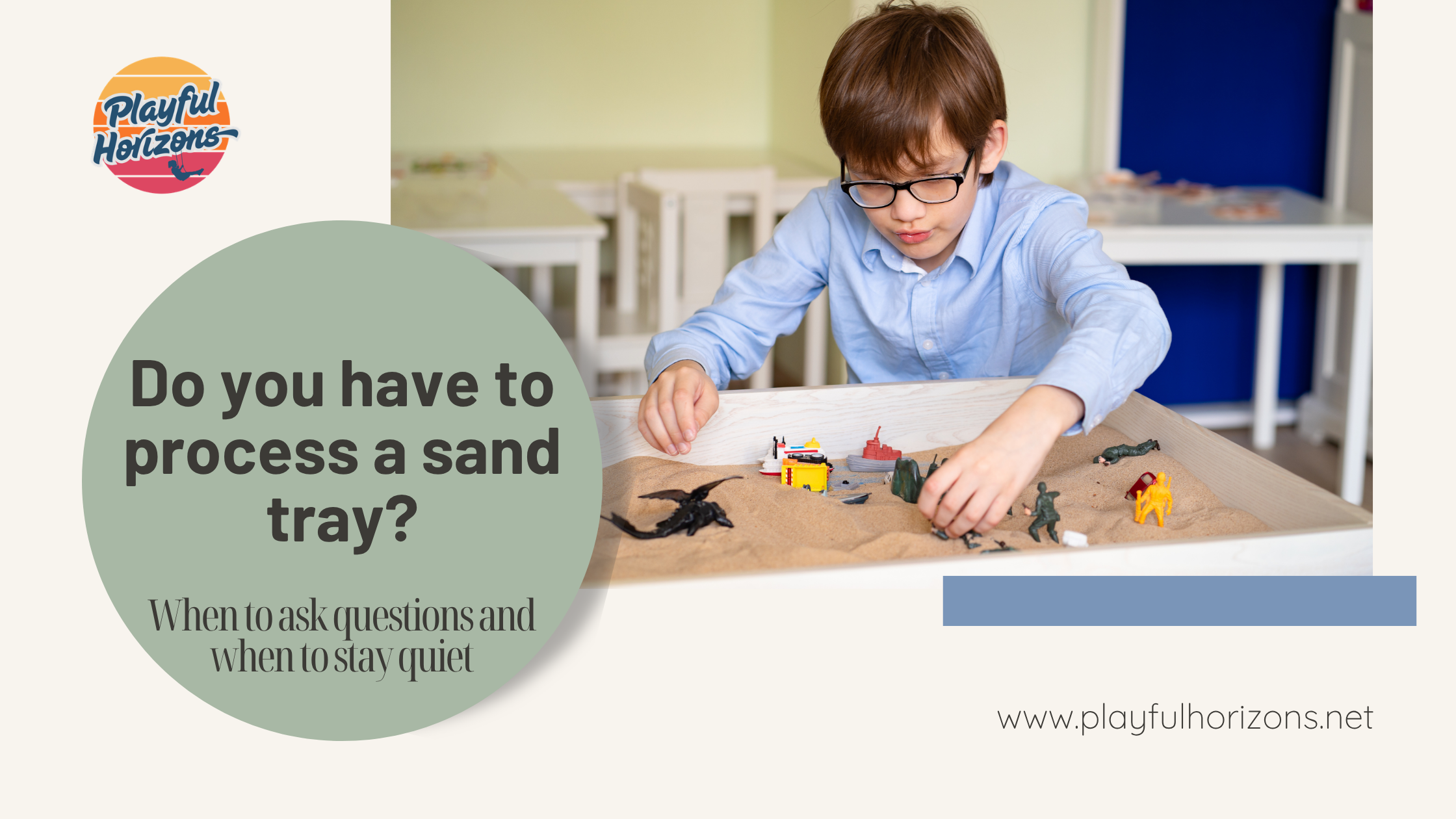
Do You Have to Process a Sand Tray? When to Ask Questions and When to Stay Quiet
Whether to process a sand tray depends on your theoretical orientation, the client's developmental level, whether the tray was spontaneous or directive, and the depth of the client's immersion in their own metaphor. In child-centered work, silence and presence are often more therapeutically powerful than questions. When questions are used, they should invite the client to share their own meaning rather than suggest the therapist's interpretation.
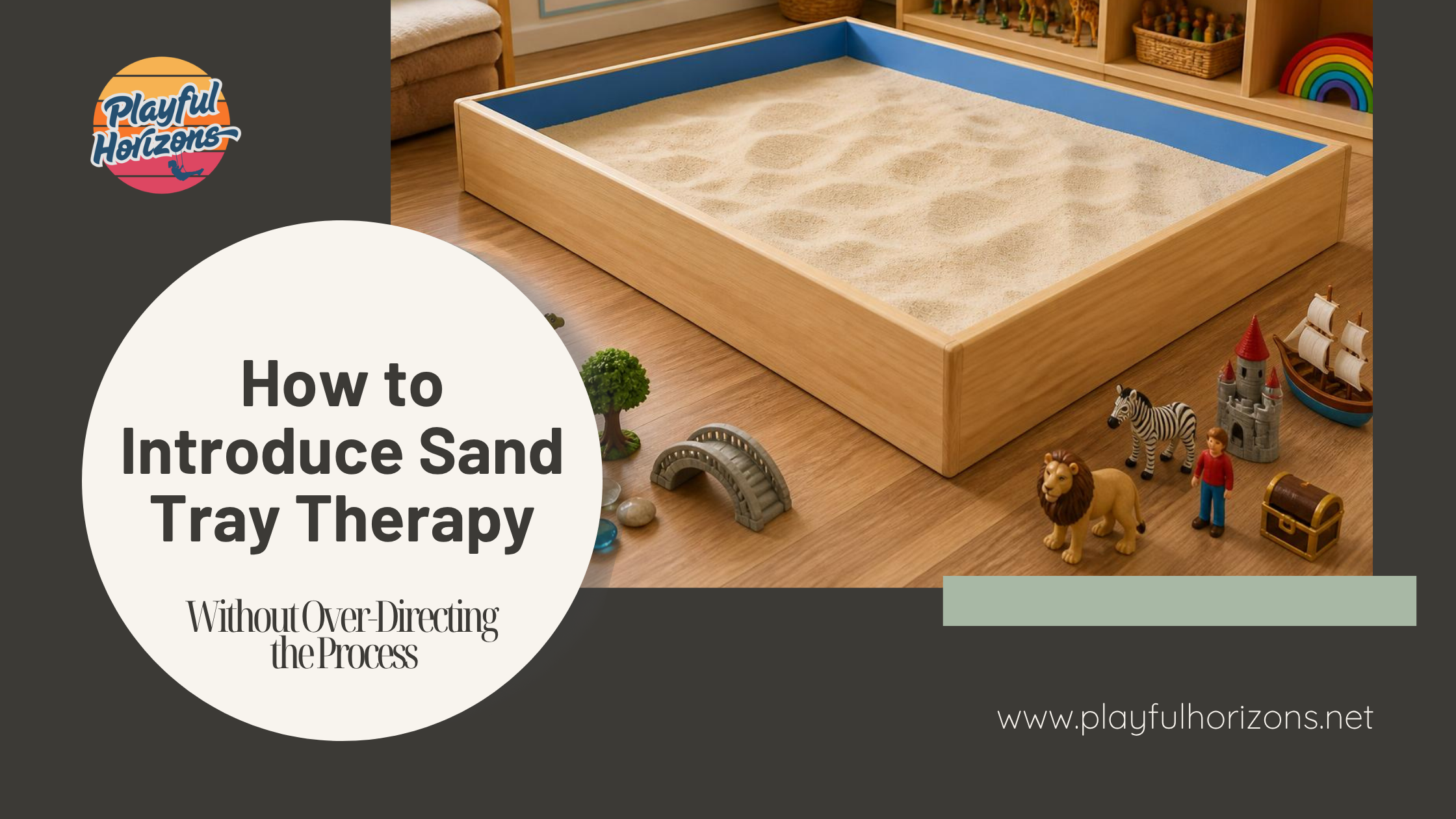
How to Introduce Sand Tray Therapy Without Over-Directing the Process
Introducing sand tray therapy well means saying less than you think you need to. In a child-centered model, the tray is simply part of the room. It’s available, accessible, and uninstructed. In more directive work, a brief, clear introduction is all that's needed. Point to the tray, point to the miniatures, and invite the child to create a scene in the sand. Your clinical stance, not your explanation, is what shapes the therapeutic experience.

Best Sand Tray Miniatures for Play Therapy: What You Actually Need to Build a Useful Collection
Building a sand tray miniature collection for play therapy doesn't require hundreds of pieces … it requires symbolic range. A strong collection includes representation across 12 core categories: people, animals, buildings, transportation, vegetation, fences and gates, natural items, fantasy, spiritual and mystical, household, landscaping, and miscellaneous. The goal is for any client to walk up to your shelves and find something that can represent their world.

The Top 3 Miniatures Kids Use to Represent Parents in the Sand Tray
In sand tray therapy, the miniatures children choose to represent their parents often reveal more about those relationships than anything said aloud. Across hundreds of sessions, three miniatures appear most frequently: simple colorful people figures (often used to show distance or neutrality), bride and groom figures (frequently chosen to represent idealized or performative parenting), and a figure hunched over a phone (the most heartbreaking and most common of all).